
VISITING THE INTERIOR
Black & Grey, the Vitriol Issue, and what every editorial after it was really about

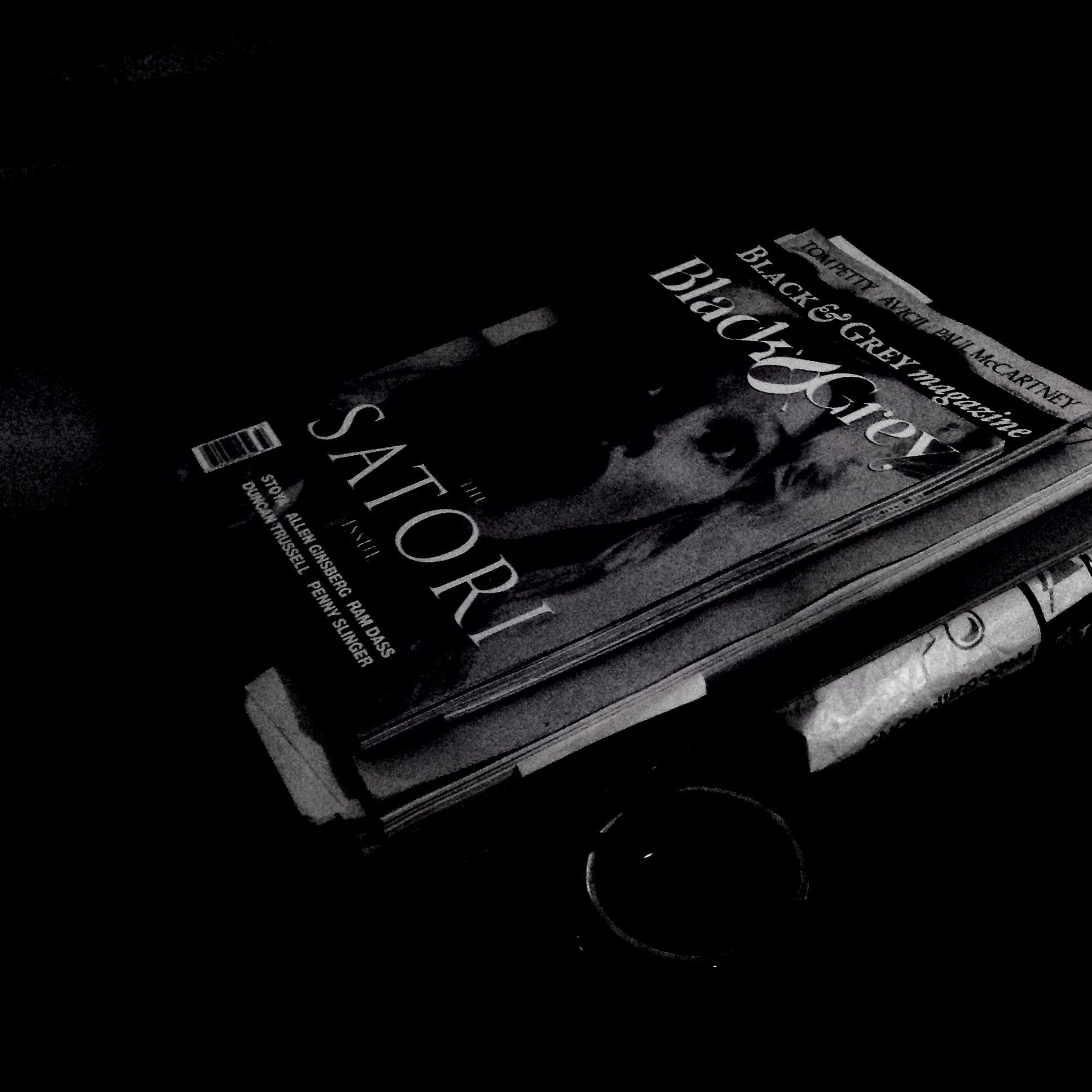
There is a principle in alchemy that the path inward is the only path that produces anything real. Visita Interiora Terrae Rectificando Invenies Occultum Lapidem. Visit the interior of the earth, and by rectification you will find the hidden stone. The first letter of each word spells VITRIOL, which in English we use as a synonym for caustic speech, for the kind of criticism that burns. Both meanings are present and neither cancels the other. The burning is the method of the finding.
In 2015 I was working on the Vitriol Issue of Black & Grey magazine. I was running NINESIXTYNINE, the creative agency I’d operated since I started the magazine that had become essentially a staffing agency for creatives, and I was experiencing something I could only call at the time boredom — though boredom was too small a word for it. What I was actually experiencing was the structural recognition that feeding creative talent into the machinery of fashion, advertising, and editorial media was itself the problem I should have been analyzing instead of perpetuating. The machine didn’t generate culture. It extracted it, laundered it, and returned it to the market as product, and by the end I had spent fifteen years being the pipeline. A pipeline that ended in generative AI, and theft of my talent’s well… talent.
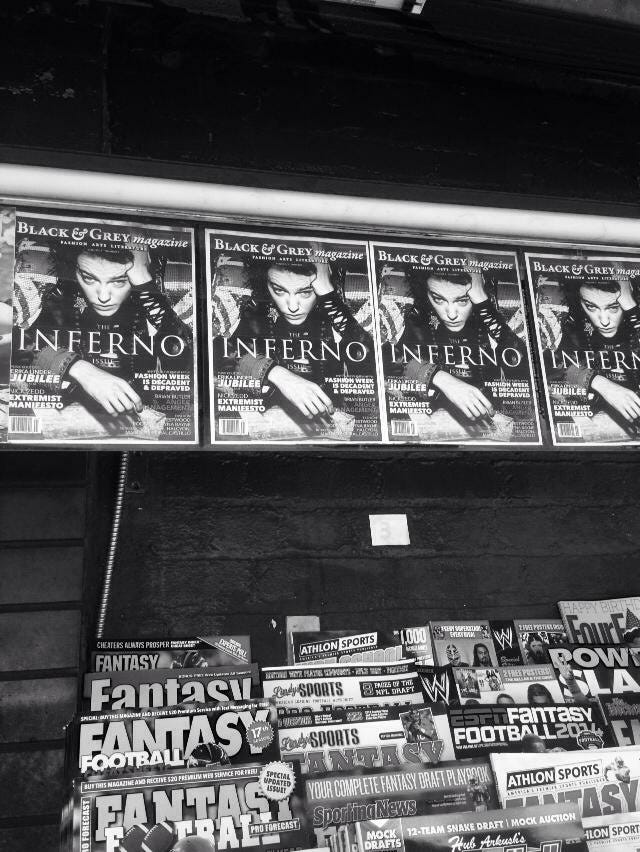
I never ended up publishing this issue, for a number of reasons. I used to blame the art director for taking too long (and taking a salary for it every time he needed to pay rent. It wasn’t just that. It wasn’t the distribution infrastructure changing when a distributor just stopped distributing — keeping Newsweek on trucks for three weeks before they switched to antlers distributor. It wasn’t the economic issues where my distributor ha sold out of every single drop of the magazine I gave them and they still charged me. No it was I was not getting the return I wanted, I was starting a new relationship, having another kid, and feeling like something was happening to me personally that I needed to get through with my work. So I thought long and hard about this issue. Then I shuttered it. And almost immediately the phones started ringing — Flaunt, Purple, Interview, Autre, Glassbook, the titles I had needed for Ingram distribution, the comparative titles that had defined the market I was operating in. They wanted the photographer, the eye, the writer, the ‘good editor’ they even wanted the way I look in one case and put me in an editorial shot by Michael Donovan with a gin to my head — it was the sensibility. They wanted, I came to understand later, what the magazine had been.
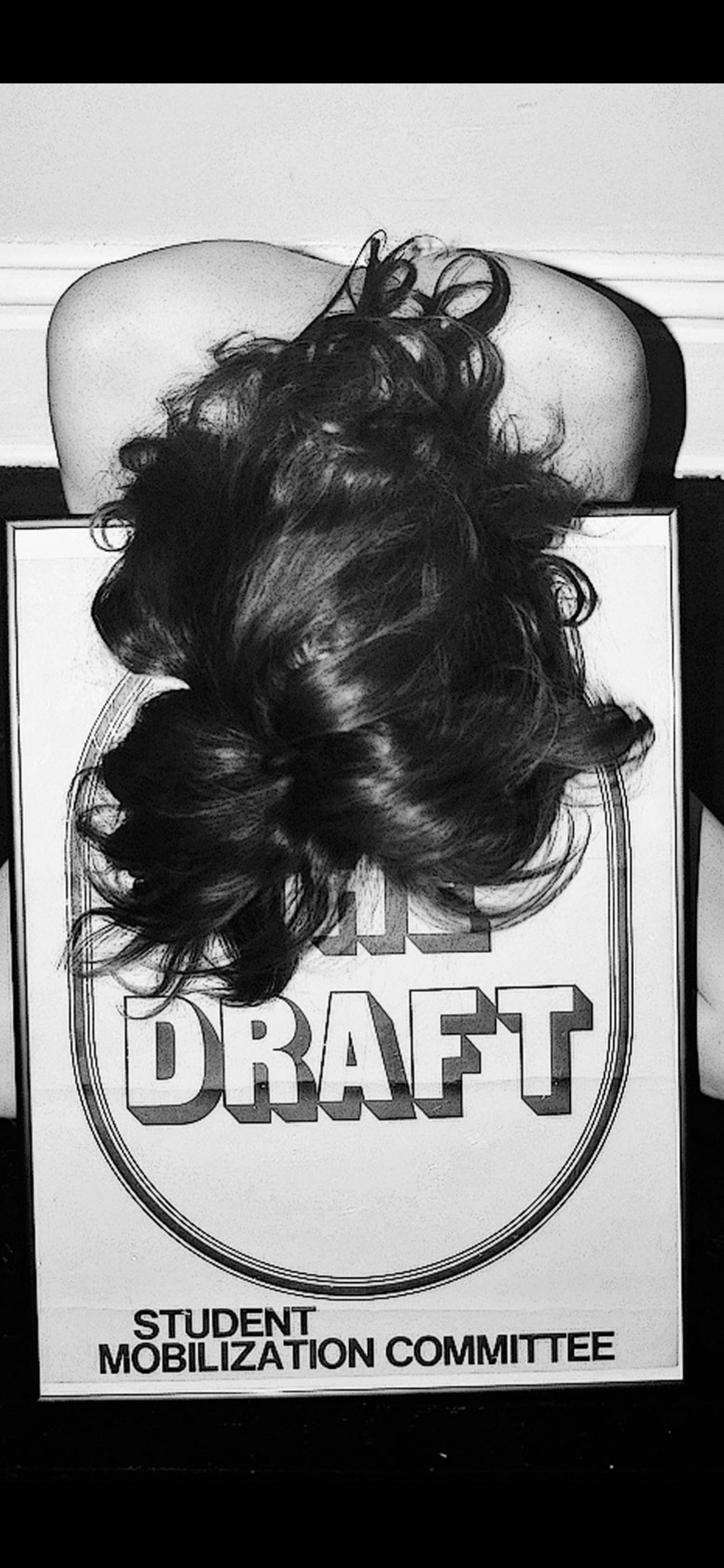
Every editorial I shot for those titles between 2015 and whenever I shot the last one was, in some sense, a little Black & Grey. The work I was doing for them was shaped entirely by what I’d been doing for myself. The difference was their advertisers, their editors, their institutional immunities and immunodeficiencies — and eventually, their fear. Which brings me to Glassbook, to 2016, to a swastika I found on a wall in Los Angeles, and to the clearest demonstration I know of why Black & Grey existed in the first place.
I was never afraid.
What the Wave Was
Between 2010 and 2016, dozens of independent print magazines combined art, photography, fashion, and literary ambition in ways that defined what observers were calling a golden age of indie publishing. The equation was consistent: high production values, interdisciplinary content, and a defiant commitment to print as an elevated medium in the face of digital’s supposedly inevitable takeover. The titles that defined this wave were almost uniformly operating along a New York–London–Paris–Berlin axis. They were also, like Black & Grey — extremely personal to each editor-publisher.
Purple (Paris, Olivier Zahm) mixed fashion with philosophy, shamanism, sexuality, and whatever Zahm happened to be obsessing over that season. 032c (Berlin, Joerg Koch) published what Koch called research dossiers — thick, intellectually serious investigations into figures from Rei Kawakubo to William T. Vollmann, packaged with fashion photography by Juergen Teller and Wolfgang Tillmans. Dazed (London, later under Isabella Burley) championed gender-transgressive fashion and underground photography, building a genuine collector’s publication with real countercultural knowledge underneath it. Fantastic Man created a pared-back, text-heavy fashion magazine explicitly meant to be read. Sang Bleu bridged tattooing, BDSM, and contemporary art. Girls Like Us mapped feminist and queer community through essays and manifestos. Aperture relaunched in 2013 under Michael Famighetti, building toward what became the landmark Vision and Justice issue of 2016. The same photographers — Teller, Tillmans, Ryan McGinley, Richard Kern — and the same writers — Glenn O’Brien, Jeff Rian — circulated across multiple titles, creating a densely cross-pollinated ecosystem that felt, from the inside, like a movement. I ended up being in the room with all of them one time or another. At some bungalow in Venice with Ryan, at the Chateau Marmont with Juergen or Olivier, shooting with one of Wolfgang’s proteges in DTLA, in New York running into editors for Dazed with D’Agata. It was also this time that I started a friendship with Bruce Gilden, started talking to MAGNUM and they even asked me for advice. IT was a very strange time.
What almost all of them shared, underneath the editorial ambition or photography vision, was a dependence on luxury fashion advertising to make anything at all happen. Purple ran Gucci campaigns. 032c ran Saint Laurent. Dazed ran Bottega Veneta. The intellectual seriousness was real — I’m not dismissing it — but it was funded by houses that needed the association with transgression and avant-garde credibility as much as the magazines needed the revenue. A few of the younger magazines, like AUTRE — which, not going to lie, I ended up funding their first perfect bound edition and was associate publisher, until they thought my voice was maybe not what they wanted or too heterodox or just whatever. FLAUNT oddly and reliably published me often, and PURPLE liked me at events or contributing to Diary, and OZ has been a good friend. I was supposed to interview Raymond Pettibon for the magazine, but Raymond is this big hulking guy and I think he took one look through me and that was it. I think someone else did it.
The magazines were providing cultural legitimacy laundering services for the fashion financiers and for the most part they still do, and the service relationship shaped what they could and couldn’t say, what they could and couldn’t shoot, what they could and couldn’t keep when a brand pulled an advertiser threat. This isn’t always the case, as any interview with Olivier Zahm will tell you, in fact he told LAMPOON magazine that he wanted to do a manifesto for independent magazines so advertisers and clients knew how to deal with them, with us. I don’t think this ever transpired. Money does indeed talk.
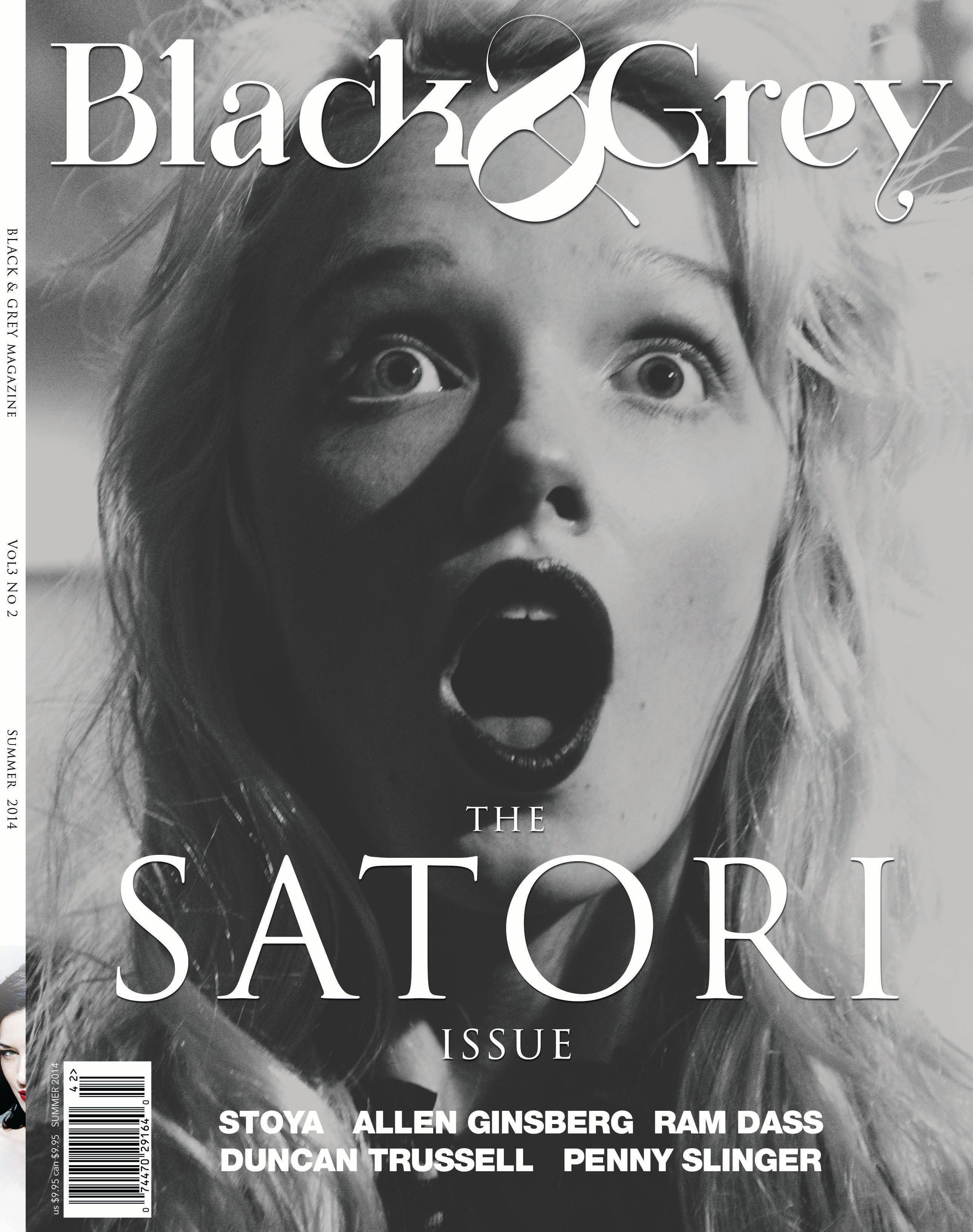
I never had that problem. Black & Grey had no such relationship. It had no safety net of that kind at all. What it had instead was a different kind of foundation.
Where the Lineage Actually Came From
The Vitriol Issue opens with an epigraph from Takuma Nakahira, taken from the afterword to Provoke No. 1, published in Tokyo in 1968. Nakahira wrote about the gap between political engagement and image-making — the impossibility of resolving that gap, the necessity of living inside the tension rather than collapsing it in either direction. Accept the contradiction. Participate in the political struggle. Take photographs separately, as though these were two different registers of being. Don’t pretend the camera is neutral. Don’t pretend the political work dissolves the question of what photography actually is.
I chose that epigraph before I had the full theoretical architecture for what the PROVOKE movement represented for my own practice. Or subsequent movements and moments and photographers and why my fashion identity or journalistic identity — as vague as it was — was always at odds. As D’Agata told me, “You are at war with your industry.” What I knew was the feeling Nakahira was describing, because I had been living inside it for twenty years. My formation at the Jack Kerouac School of Disembodied Poetics at Naropa University — studying under Allen Ginsberg, working as Anne Waldman’s assistant during the writing of The Iovis Trilogy, sitting in the same rooms as Diane di Prima, Kathy Acker, searching out Lydia Lunch separately, Amiri Baraka’s intellect and rage — was not an just aesthetic education. It was a lineage education. The tradition I inherited didn’t teach me how to look like the Beat generation. It taught me what the Beat generation was actually doing, which was refusing the boundary between art and political consciousness, insisting that the personal was also the historical, and operating from the conviction that the underground is where the actual culture lives. I may not have COINTELPRO level of infiltration, but in my soul there was the thing the Czech Surrealists asked me in 1999, “why do you do it? Would you do it if you were threatened?” Yes, evidently I would and have.
Ginsberg introduced me to Robert Frank, and not long after that Hunter S Thompson came up and asked me for a cigarette. That sentence contains a lot. It means that the connection between my photography practice and The Americans or Gonzo journalism was not a scholarly reference or an influence-spotted-by-critics — it was a handshake passed down a line of people who knew each other. Frank’s snapshot aesthetic, his refusal to clean up the grain, his insistence that what you see is what was there, grain and blur and all — this reached me through the person who had known Frank, not through a monograph. The only other editor-photographer that has even close to this lineage is Zahm, from what I know his father was secretary to Jean-Paul Sartre. I was the American lineage, he was the French. We are similar ages, he just has better clothes and wasn’t as culturally nomadic as I was. He stuck with it since the early 90s. I embodied it, and sometimes bodied it — it’s taken its tool
When I placed Nakahira’s epigraph on the first page of the Vitriol Issue, I was announcing that the magazine was operating inside this lineage. Not citing it. Not paying aesthetic homage to it. Inside it. Purple listed shamanism and poetry in its editorial vision. 032c published research dossiers on Herzog and Vollmann. Dazed kept Cookie Mueller’s play in the editor’s office. These were serious acts of curation. But there is a difference between curating a tradition and continuing one, and that difference is what made Black & Grey singular in its landscape and also what made it economically precarious in that landscape, because the tradition it was continuing had never been commercially sustainable and wasn’t about to start.
The Vitriol Issue as Ur-Text
The editorial forward traces the poem VITRIOL, which I wrote in 1993 at the Jack Kerouac School in the specific political atmosphere of Boulder, Colorado that year — the religious right gaining institutional ground, Rocky Flats still radioactive in everyone’s consciousness, the Los Angeles insurrection one year in the past, a minister named Wellington Boone telling his Black congregation at a men’s conference that God had put them into slavery for a purpose, and Amiri Baraka standing next to me asking whether I’d told them God was dead. The poem was addressed to friends: Nikki, born intersex, navigating Catholic schools on both sides of the gender line. Kanti, unable to locate herself in the American binary, suicidal. Brad Will, Pasq Wilson, Akilah Oliver. All dead now. All dead before their time.
The forward moves the poem from 1993 to 2015 and argues that nothing structural has changed. The thought police have new technologies. The underground has new aesthetics. The dialectic is the same. This is the argument that runs through everything I have built since — the claim that surveillance capitalism is not a new phenomenon but a new technology in service of a very old extraction logic, and that the underground’s relationship to that logic is structural, not circumstantial. The magazine was making this argument in 2015 before I had the Hegelian vocabulary to make it cleanly.
Michael Donovan’s art director’s note gets at the same thing from a different angle. He identifies the fashion photographer’s dilemma in precise terms: photographers hide their personal work from their clients because the personal work would scare the clients, because the personal work is where the actual vision lives, and the actual vision is not what the clients are paying for. The clients are paying for the use of an eye that has been trained by personal vision without having to underwrite the training. The creative agency relationship is structured to capture the output of a vision while insulating itself from the conditions that produced that vision.
Donovan wanted to give fashion photographers a space to show what they actually saw. That’s what the magazine was. A space outside the client relationship where the valve got removed from the pipeline.
Anne Waldman’s interview — conducted by me and Mandy Kahn, shot by Ginsberg — is the magazine’s philosophical center even if I couldn’t have said so at the time. She describes the composition of Jaguar Harmonics as transcription — notes taken within hours of an ayahuasca ceremony, a refrain received rather than constructed. The poet as pipeline rather than author. The ceremony creating conditions under which something that was already present could flow through the body and emerge as language. This is what I now call Permission Without Control, and it was already the operating principle of the magazine before I had named it: show up, open the aperture, refuse to retouch, do not control what flows through.
Lydia Lunch’s piece — The Philosophical Spirit of Vitriol — holds together the theoretical and the visceral in the way that only Lunch can, which is to say completely and without apology. The Istanbul narrative inverts the surveillance apparatus. The camera is seized from its intended operators and turned back on the machinery of male entitlement. The pipeline runs in the opposite direction.
Jordan Eagles’s section on blood as medium carries Bataille’s sacred transgression through the most direct material possible — slaughterhouse blood encased in plexiglass, backlit until it glows, preserved at the moment of maximum organic intensity. The cave painters working in blood were making documents. I was here. This animal was here. The relationship between my hand and this surface produced this mark. The Licensed Witness at the prehistoric scale.
Abdul Kircher’s photographs of Tony — shot when Kircher was approximately nineteen years old and working as the magazine’s intern — are the are-bure-boke aesthetic in its most direct form, operating through relationship rather than distance. An elderly man, nude, birthday hat, American flag, Colt 45, party detritus. The grain is the argument. What you see is what was there. When you hang out with old people you forget how old you are. The Licensed Witness framework before I had named it, practiced by a nineteen-year-old with enough trust built between himself and his subject that the subject is no longer performing for the lens.
Jonathan Waiter’s section is the most honest thing in the magazine: a gap made visible. Waiter was supposed to contribute images. He went silent before Christmas. The magazine publishes the note explaining his absence alongside images sourced from his social media documentation of his own illness — surgical instruments, x-rays, the body under clinical intervention. The archive is incomplete because the world is incomplete. The Lorem ipsum placeholder in the Leary archive section is the same honesty. The introductory text was never written. Leave the Lorem ipsum. It is more truthful.
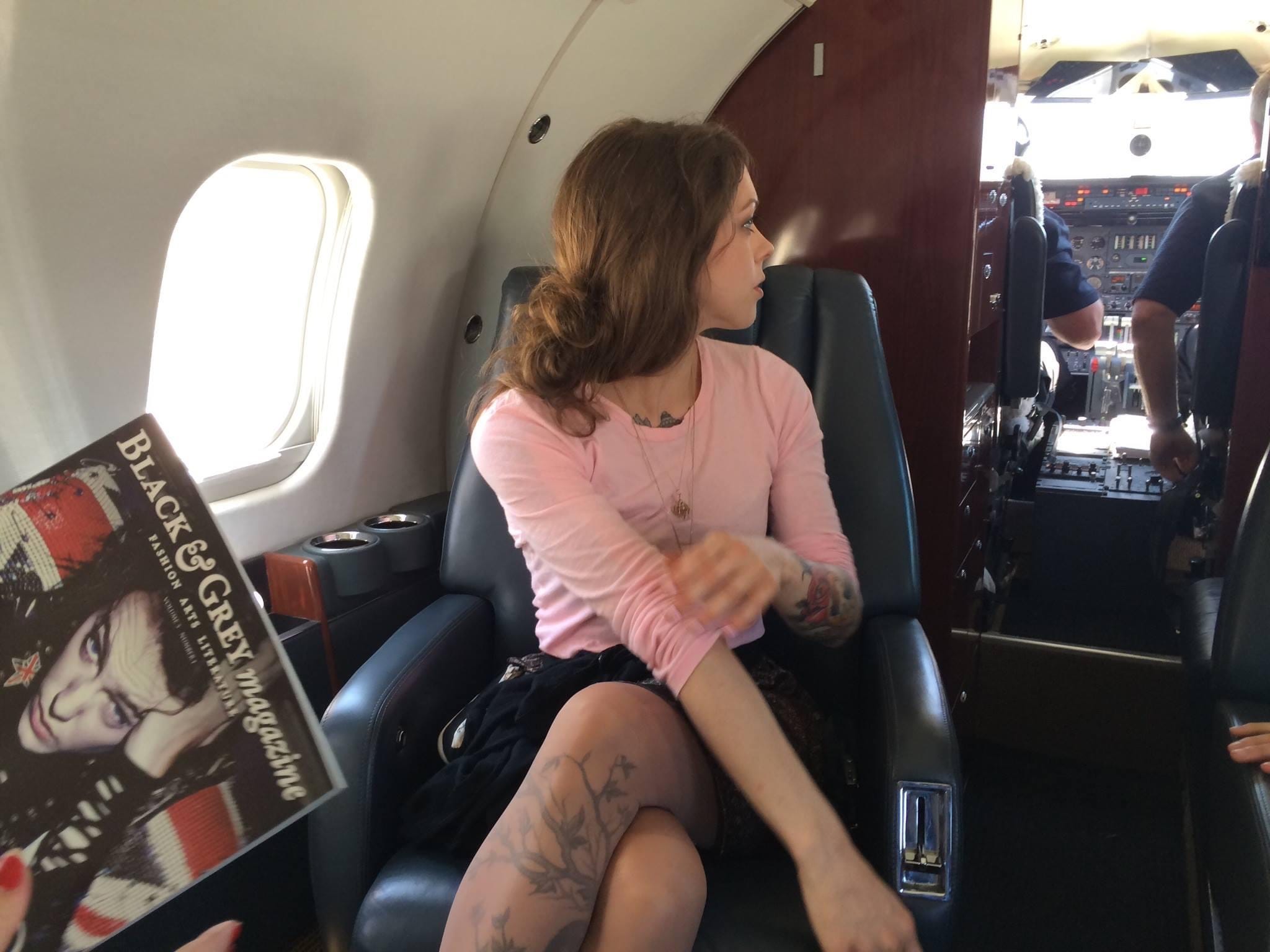
Every Editorial Was a Little Black & Grey
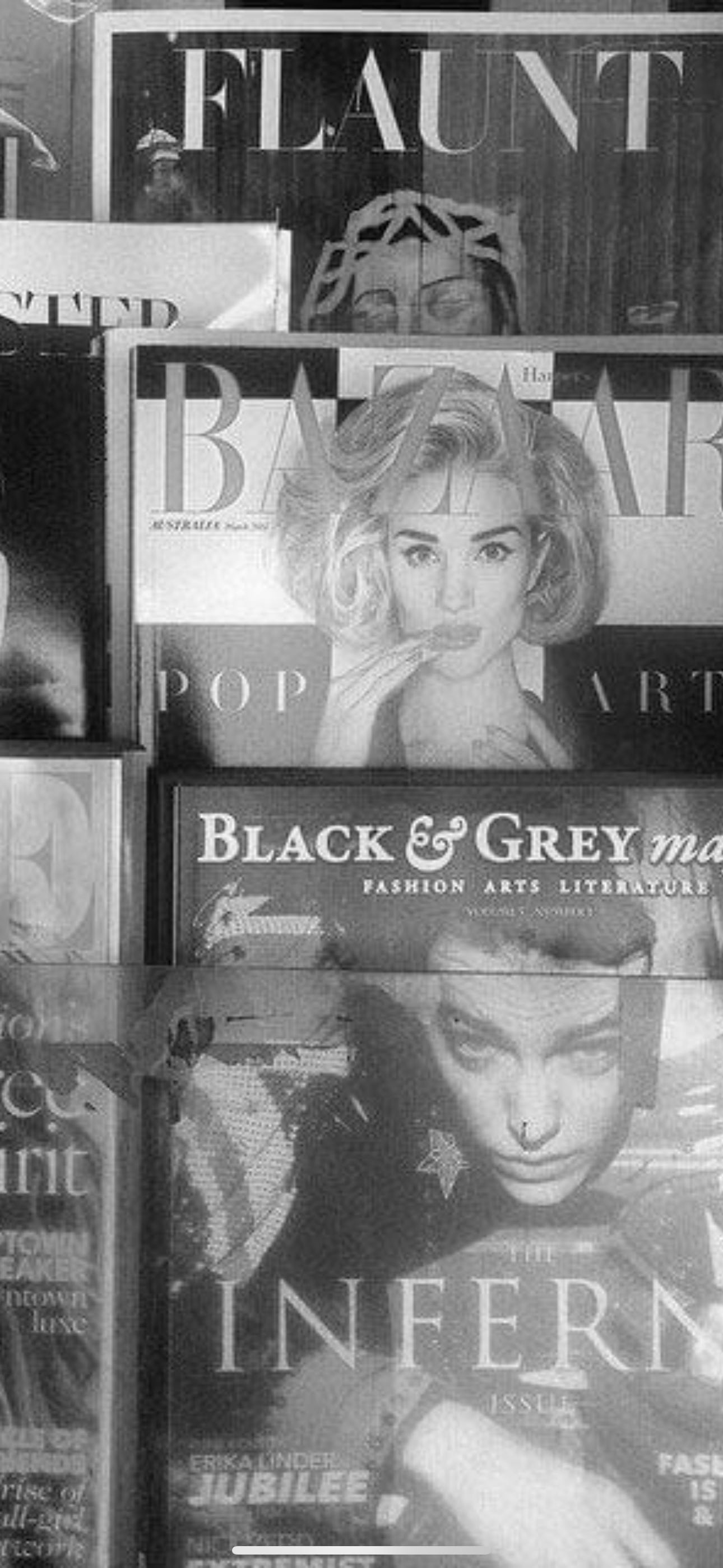
After I shuttered the magazine, the calls started coming from the titles I had needed for Ingram distribution. Flaunt. Purple. Interview. Autre. Glassbook. These were the comparative titles — the magazines that occupied the same market position Black & Grey was trying to enter, that had the distribution infrastructure and the institutional relationships that a five-year-old LA independent couldn’t compete with directly.
They wanted the work. They got the work. What they were getting, though they may not have framed it this way, was the sensibility that the magazine had been developing and refining — the PROVOKE aesthetic, the licensed witness framework, the refusal to retouch, the insistence on shooting what was actually there rather than what the brief specified. Every editorial I shot for those titles was a little Black & Grey. The sensibility traveled with me because it was mine, not the magazine’s. The magazine had been the laboratory. The editorials were the applications.
Purple published it. Interview published it. Flaunt published it. Autre published it. The work fit because the territory overlapped. The difference was always the degree of fit — how much of what I was doing could pass through their particular editorial filters before it became something else. You learn to work with these compressions. You understand that the commercial magazine is not the enemy — it is the terrain, with its particular topography of constraints and possibilities, and you learn to shoot in a way that puts the most important content in places the constraints can’t reach.
Most of the time, enough passed through. And then there was Glassbook.
The Swastika and the Advertiser
In 2016 I shot an editorial for Glassbook that was an extension of my Baader-Meinhof piece — the work I’d been developing around the Red Army Faction’s specific visual language, the aesthetics of political violence, the way radical movements generate their own photographic grammar and how that grammar infiltrates fashion and underground culture in ways that the fashion industry can simultaneously exploit and disavow. The Baader-Meinhof editorial was already the kind of work that required a specific editorial context to function, that needed the political frame to prevent it from being read as simple provocation.
During the shoot I found a swastika on a wall in Los Angeles. I shot in front of it. The swastika was not incidental. It was the point. The editorial was about the persistence of fascist iconography in the American landscape — the way the symbols of political violence continue to circulate, continue to be present on walls and in spaces where people live and move, continue to demand a response or an acknowledgment or at minimum a refusal to pretend they aren’t there. Shooting in front of it was the Licensed Witness operating at its most direct: this was there. I was there. The relationship between my camera and this surface produced this image. What you see is what was there.
I regret to say we won't be able to proceed with publishing your story. This has turned out to be an upbeat issue.
Glassbook didn’t publish it. Their reasoning was straightforward and honest, at least: 2016, advertisers, the political climate, the impossibility of running images that included a swastika without losing the commercial relationships that kept the magazine viable. I understood the logic. The logic was also exactly the thing my magazine had been designed to be immune to.
Black & Grey had no advertisers to protect. The Vitriol Issue could run Lydia Lunch’s philosophical violence and Jordan Eagles’s slaughterhouse blood, OZ could do nudes (an editorial ironically also nixed by a new version of the 70s iconic Playboy-like French LUI), and a Nakahira epigraph about the irresolvable contradiction between political action and image-making because there was no advertiser relationship to trade against any of it. The magazine’s editorial freedom was a function of its commercial precariousness, and its commercial precariousness was a function of its editorial freedom. The two were the same thing from different angles.
The Glassbook editorial lived in a dropbox folder. The swastika continued to exist on its wall — and then we found out why it was there in the first Trump Presidency, and the rise of all these.. well, Nazis. The Baader-Meinhof frame that would have made the image legible as cultural criticism rather than provocation didn’t transfer to the magazines that had the distribution infrastructure I’d been chasing. But FLAUNT published a Baader-Meinhof take, with Lydia Lunch co-writing with me. The distribution came with the advertiser relationships, and the advertiser relationships came with the editorial constraints, and the editorial constraints were precisely what Black & Grey had existed to operate without.
I kept shooting for those titles. The work was real. But the Glassbook editorial clarified something I had been circling since I shuttered the magazine: the independent publication wasn’t a stepping stone to the institutional titles. The institutional titles were, at their best, a partial and compromised version of what the independent publication did at its most complete. You couldn’t be both at the same time and have any sort of longevity.
What Survived, What Died, and Why
The magazine ecosystem I was operating in has been reshuffled dramatically in the decade since. The pattern is legible now. The publications that survived were the ones with the strongest commercial infrastructure, or needing the least scale — Purple (biannual, still running, Zahm’s vision intact), 032c (biannual, expanded into a fashion brand generating real revenue), Fantastic Man, Self Service, Kaleidoscope, Aperture. Founder-led, independent, never dependent on venture capital. The publications that nearly died or fully died were the ones most vulnerable to the economy’s disruptions: Vice filed Chapter 11 in 2023 and shut its website in 2024. Interview folded in 2018 owing $3.3 million to its own staff, bought out of bankruptcy and relaunched four months later. i-D sold during Vice’s bankruptcy, lost most of its editorial staff, and relaunched in 2025. Paper laid off its entire staff in 2023. Nylon ceased print in 2017. Jalouse shuttered in 2021. Butt went on an eleven-year hiatus and came back in 2022 with Bottega Veneta as its sole advertiser — which is its own commentary on what survival options look like.
This is all okay, you know. We didn’t get into this to get rich. We have something to say. I could be a poet-photographer and get most of it done, and wait.
The common thread through the failures isn’t print versus digital like many think it is. It’s the specific vulnerability of publications that scaled their ambition beyond their editorial core on the assumption that growth would sustain the model. Vice was worth $5.7 billion at its peak. It was worth nothing by the end except its original transgressive identity, which it had spent a decade systematically trading away for access to the mainstream. Recent new issues of VICE have a sort of Incel philosophy, which makes sense. One of the original founders of VICE ended up founding Proud Boys and hanging out in art circles in New York in the 2000s. Same circles as some of my friends, oddly. Poets and artists like Dash Snow, OZ, others. Again, odd — maybe. Putin’s Sarkov was an absurdist theatre guy. Maybe the difference between flirting with fascism and fascism is a very very thin line.
Interview spent fifty years as one of the most important cultural publications in America and then got leveraged to death. The magazines that survived were the ones that never stopped being exactly what they were.
Black & Grey didn’t fail. It paused. The difference I assure you, matters. It just takes one more time to see what happens.
The specific territory it occupied — Beat lineage, psychedelic consciousness, feminist transgression, underground photography, literary criticism from inside the practice rather than looking at it from outside — has resurfaced in fragments since, and maybe what one generation can’t fathom the next will.
Elastic (Spring 2025, Hillary Brenhouse, backed by UC Berkeley and Harvard’s psychedelic studies programs) is the closest new equivalent. Hamburger Eyes has been doing the underground B&W photography work since 2001, still publishing, recently collected by SFMOMA. Among the established titles, 032c remains the gold standard for the intellectual-transgressive-visual combination. But Koch’s formation was hardcore and straight-edge, not Beat (American — even Zahm cites 2nd Gen New York School post-Beat John Giorno as the reason he moved to New York) poetics. The sensibility is adjacent. The tradition is different.
None of them combine everything the Vitriol Issue combined in a single object, that no one but the few I have shown and those who produced it have seen. The combination was specific: Anne Waldman interviewed by her student, photographed by her student’s teacher’s teacher. Timothy Leary’s archive shot by the person who had the access. Lydia Lunch given space to be Lydia Lunch without editorial softening. An intern’s photographs of his elderly friend treated as seriously as the established photographer’s work. Activist artist-stylist provocateur Bailey entering and anarchistic ally a museum. A section left incomplete because the contributor went silent, and the incompleteness published honestly instead of papered over. Zahm even contributed an editorial that all of the rest of the crew pulled out of.
I told him we should have the title like Bataille, or LAURE.
I agreee. Le bleu du ciel is a great idea should we leave it in French?
lv oz
Purple Magazine
What the Magazine Knew Before I Did
Reading the Vitriol Issue now, ten years out from its publication, is a specific kind of encounter. The practice preceded the theory, the thesis. The magazine was doing Exposureism before I had named it — the process by which the apparatus of visibility becomes the mechanism of erasure, by which the platform that facilitates self-documentation simultaneously harvests it, by which the underground’s energy gets captured and returned to the market as commodity. The @Yungelita spread articulates this with the image of prescription pills in an ornate compact case alongside Instagram documentation that the caption calls an online diary. A diary is private. An online diary is content. The pill manages the anxiety the content generates. The extraction is nested.
The magazine was doing the Licensed Witness and my collected editorial framework before I had named it — in Kircher’s photographs of Tony, in my photographs of the Leary archive, in the note explaining Waiter’s absence. It was doing Permission Without Control in the Waldman interview, in the Frank inheritance, in the Nakahira epigraph. It was doing the updated are-bure-boke aesthetic in every image that prioritized presence over clarity.
Even the fashion editorial work wasn’t fashion editorial but the art of it with Olivier. Finally the agents pulled the editorial cause, well, they may have been too busy to realize an auteur doesn’t use the moodboard. How frustrating and silly.
The photoshoot did not adhere to the mood board that had been submitted to us and the conditions we had discussed.
These weren’t concepts I applied to the magazine retroactively. The magazine was the laboratory in which the concepts were developed. The theory is what happened when the practice became articulate enough to explain itself.
What I didn’t have in 2015 was the vocabulary, the institutional framework, and the temporal distance to see what the magazine was doing. What I have now is PERSPECTIV — a venue with no advertisers, no institutional constraints, no commercial relationships that require editorial softening.
A little Black & Grey. Grown up. With better understanding.
The alchemical principle holds. Vista Interiora Terrae Rectificendo Occultum Lapidem.
Visit the interior. By rectification you will find the hidden matter. I was doing the groundwork in 2015. The fuck around and finding out is what’s been happening since. The Glassbook editorial is still in a dropbox link. The swastika is still on its wall, or it’s been painted over, or it’s been replaced by something else. OZ has published many editorials since, and PURPLE is going strong. FLAUNT is having parties twice a month. AUTRE is publishing their brand of whatever it is, semi-frequently. The magazine shuttered and the editorials traveled and the theory developed and the publications I shot for came and went and nearly died and came back or didn’t, Donovan is shooting and not art directing thank god, and the practice continued through all of it, accumulating clarity.
And it comes back. Time to do it all again.
West Hollywood, February 2026
Bil Brown is a photographer, writer, and cultural critic. He is the founder and publisher of Black & Grey magazine. PERSPECTIV, a reader-supported Substack on visual culture, photography theory, and political economy. He teaches photography workshops through Leica Akademie and Bespoke programs and documents and creates with underground communities in Los Angeles and elsewhere. He shoots and maintains a strict no AI image rendering philosophy.