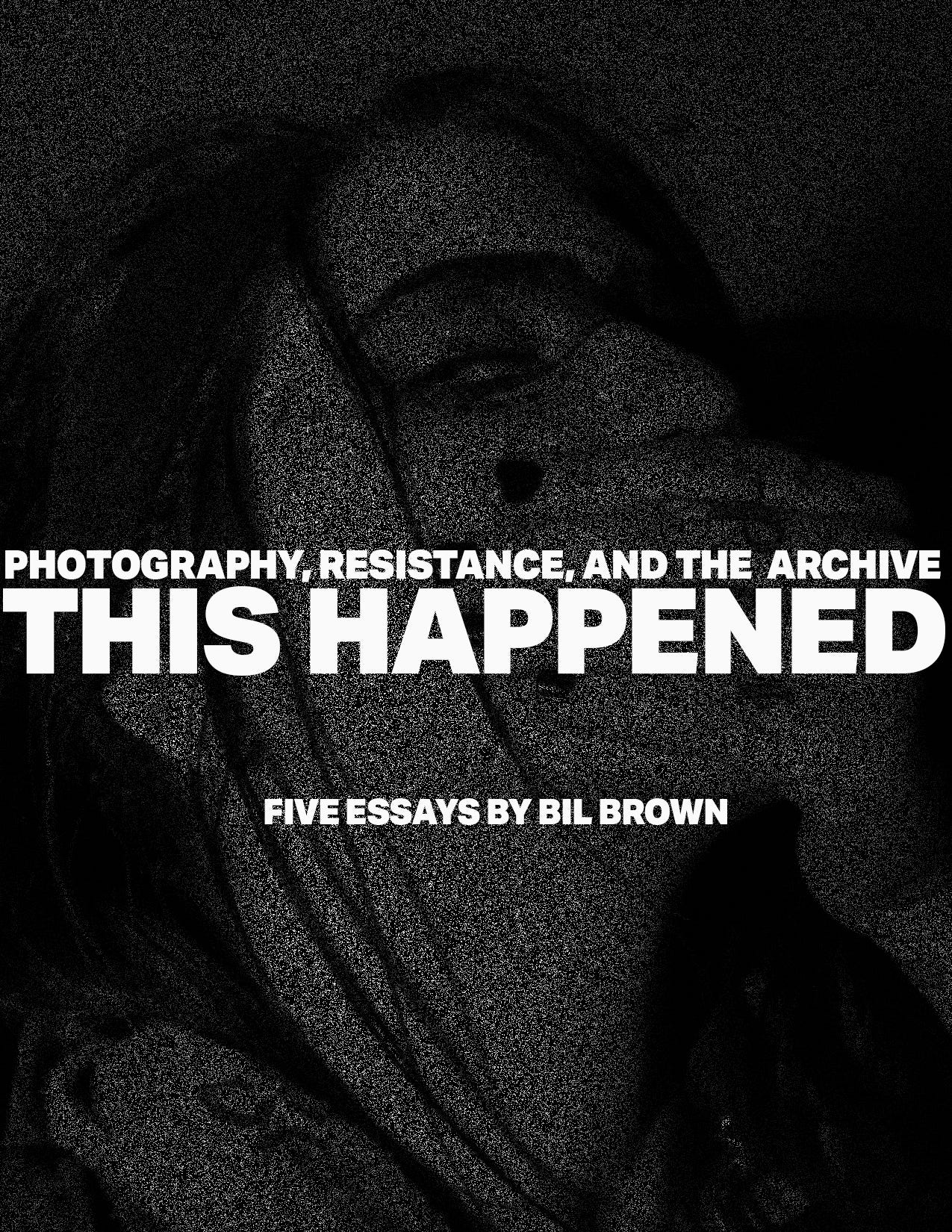
THIS HAPPENED
Photography, Resistance, and the Archive

Are you willing to be sponged out, erased, cancelled,
made nothing?
Are you willing to be made nothing?
dipped into oblivion?
If not, you will never really change.
— D. H. Lawrence, “Aaron’s Rod”
The Forward for a new series of essays and a little pamphlet.
Foreword: The Only Question That Matters
Can we actually do anything?
I mean that seriously. I mean, given the scale of what is organized against us -— the platforms owned by people who benefit from our silence, the algorithms tuned to suppress the inconvenient, the critical apparatus that spent a century deciding which photographs counted and whose did not, the economic structure that has been strip-mining the conditions under which independent culture survives — can five essays, or fifty, or five hundred, actually change anything? Can the photograph that gets made on a mechanical film camera in a protest street in Los Angeles actually matter against the infrastructure of a surveillance state and a media oligarchy that would prefer it didn’t exist? Can the indie magazine, the newsletter, the underground exhibition, the shared darkroom, the hand-to-hand circulation of the physical object actually hold against the algorithmic tide?
I started writing this series without an answer. I may not have one still.
What I found, across five studies and roughly eighty thousand words of argument, is that the question itself is a mistake. The question assumes that the tradition of photographic resistance is new, that we are standing at some kind of inaugural moment, deciding whether to begin. It is not new. It did not begin with us. The tradition of making the image that power wanted invisible has been continuous since photography existed.
Take Vivian Maier made it in Chicago for forty years without anyone’s permission or recognition and left a hundred and fifty thousand negatives. Peter Hujar made it in a New York that was dying of AIDS and photographed the dying with a quality of attention the culture surrounding those deaths refused to offer. Takuma Nakahira argued in print that the well-composed photograph was the ideological instrument of the social order and then produced photographs so unstable and so committed to their instability that the argument became undeniable. HIROMIX carried a compact camera through her daily life in Tokyo in the 1990s and made work whose formal logic runs along the same line as PROVOKE — the blurred, the accidental, the present-tense record of an embodied encounter with the world — even if that line is something a critic traces in retrospect rather than a tradition she consciously inhabited. Zanele Muholi made an archive of Black LGBTQ+ lives in South Africa that the art world eventually came to recognize, though the archive existed first and primarily for the people in it. And this is without mentioning Gordon Parks who boldly stated that his camera was his weapon of choice.
None of them were asking whether it was possible. They were asking how.
That’s the thesis.
Not whether resistance through photography is possible — the evidence that it is possible fills the archive of the twentieth and twenty-first centuries, the official archive and the unofficial one, the one in the shoeboxes and the estate sales and the hard drives and the negatives that survived because someone thought to keep them. The tradition of resistance has always existed. The question is not whether it is possible but how it is practiced: what formal commitments it requires, what distribution infrastructure it needs, what community structures sustain it, what critical vocabulary describes it, and how it is passed on.
This series is my attempt to answer the how. Partially, provisionally, from inside the practice rather than above it. Five studies — on women photographers, on LGBTQ+ photographers, on the manosphere and the war on witness, on post-war Japanese photography, and on what the four studies together make visible — that are also, in aggregate, a practitioner’s argument for the specific, the durational, the community-built, and the stubborn over the viral, the optimized, the algorithmically amplified, and the institutionally consecrated.
There is more I have left out, I’m still diving in deep. Everyday I find more, and its alarming how many are just left out of the discussion altogether.
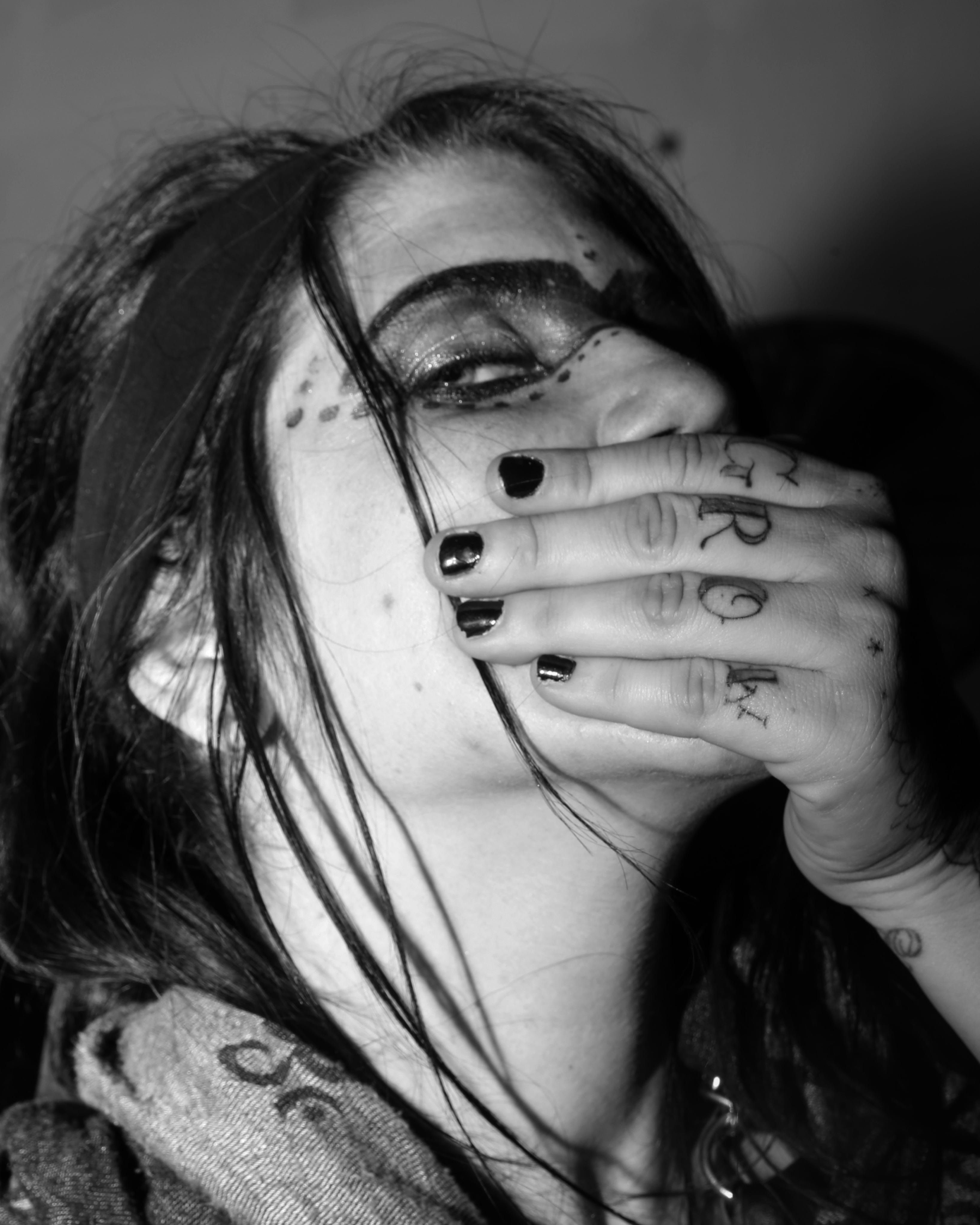
There is something the five studies share that I want to name here before the argument gets complicated. The photograph creates an obligation. Not to the institution that collects it, not to the platform that distributes it, not even primarily to the photographer who made it — but to the person in it. The image of a hibakusha’s scarred skin makes a claim on every future viewer. So does the photograph of Candy Darling dying at twenty-nine. So does every frame in my own This Is Very Bad archive, which isnt really that different than the hundreds of photographers that have done the same subject for the last decade, in previous decades, and likely well into the future. The photograph is not a product. It is an address. It says “this happened,” this person was here, you are now responsible for having seen it. That obligation is what connects every tradition in these pages, across every formal difference and cultural distance. It is also what the dominant apparatus most wants to suppress, because an image that creates obligations is an image that cannot be fully owned.
We have done this before. Every photographer whose name appears in these pages did it before us, in conditions that were in many cases significantly more dangerous than ours. The Kamoinge Workshop photographers made the images of Black American life that the mainstream photographic world refused to make, or someone like Robert Frank made and became famous for it because he had a Guggenheim to do it. Claude Cahun made self-portraits that refused stable gender identity in occupied France and received a death sentence for her trouble. Ren Hang photographed the nude Chinese bodies that the Chinese state wanted invisible until his death at twenty-nine, under conditions of repeated arrest and the systematic deletion of his online archive.
We are not the first people to ask whether it is possible. We are the latest people in a continuous tradition of answering: it is not only possible, it is necessary, and here is how it is done.
The how is what follows.
The Series
Five studies, one argument. Each can be read alone. Together they make the case that the tradition of photographic resistance is not marginal, supplementary, or historically secondary to the canonical tradition. It is the broader one --- the more historically comprehensive, more philosophically sophisticated, more honest account of what photography has actually been and what it has actually done.
I. THE APPARATUS AND THE INVISIBLE
Women, Photography, and the Unseen History of the Lens
II. THE CLOSET AND THE LENS
Queer Photography, Visibility Politics, and the Apparatus of Recognition
III. THE SODOMITE CAMERA
Witness, the Manosphere, and the War on Seeing
IV. THE WOUND AND THE GRAIN
Post-War Japanese Photography from Tomatsu to the Girly Lens
V. THE APPARATUS AGAINST ITSELF
A Synthesis and a Beginning
Make the image. Keep the negative. Pass it on.
On the Series
A Note for PERSPECTIV Readers
I have been writing this series since February, really before. It started, as most of my work starts, from a specific irritation and a lot of journaling and research.
The irritation was this.
I kept encountering the claim — in critical writing, in photographic education, in the way the photographic world talks about itself — that the exclusion of women, queer people, and photographers of color from the canonical history of photography was an oversight that was changing. A gap to be filled. A blind spot in an otherwise coherent tradition that, once identified, could be corrected through addition: add the missing figures, give them retrospectives, publish the monographs, update the syllabi, and the canon will be complete. It wasn’t changing, it was doing exactly what it was set out to do. Leave out people that threaten the canon itself.
The canon wasn’t incomplete. It was set-up, or logically organized to produce the exclusions it produced. The marketing of cameras to women as tools of sentiment rather than vision was a strategy. The critical vocabulary that coded women’s photographic practice as personal and emotional rather than philosophical and analytical was the operation of a vocabulary designed to serve a specific set of hierarchies. The clinical gaze that documented queer bodies as pathological specimens before queer photographers ever had access to the medium was the photographic apparatus being deployed as a tool of ideological control with the social contract that certain people matter but only if they are inherently safe to frankly, those who “sign the checks” of the cultural apparatus.
Can we fix it? You fix it by understanding the structure, tracing how it was built, and then refusing to reproduce it. That is what these five studies try to do. Naming it, then offering that we are in a sort of culture war that has been going on for decades.
The first essay — The Apparatus and the Invisible — goes after the women’s photographic tradition from Gertrude Käsebier through Berenice Abbott through Vivian Maier through Dorothea Lange through Carrie Mae Weems through Zanele Muholi and argues that the tradition is not secondary to the canon. It is broader, more historically comprehensive, and more philosophically sophisticated than the canon it has been excluded from. The Maier analysis engages the full complexity of the discovery narrative: she didn’t need to be discovered. She was always there. What the discovery narrative describes is the moment a man with institutional access decided her work had value. The archive made that decision before him. The essay also recovers Berenice Abbott as a case study in a different mechanism of exclusion — the coding of archival preservation and documentary labor as service rather than authorship, which erased women’s contributions to photographic history even when the contributions were visible.
The second — The Closet and the Lens — runs the same argument through the LGBTQ+ photography tradition and finds an additional dimension of violence: the medium itself was weaponized against queer communities before it was available to them as a tool of self-representation. I trace this from the Krafft-Ebing clinical archive through Minor White’s coded indirection through Claude Cahun’s refusal of stable gender identity through Hujar’s deathbed tenderness through Wojnarowicz’s rage through the ACT UP counter-archive. The AIDS section is long and the argument about Nixon’s People with AIDS versus Gran Fury’s counter-archive is the center of it: the question of who gets to make the picture of the dying is a political question before it is an aesthetic one.
The third — The Sodomite Camera — is the one written in my own voice, starting from the Sodom narrative as the original suppression mythology, running through Parsons and the Babalon Working and my own relationship to that tradition through Brian Butler and Kenneth Anger, arriving at the manosphere as the current PR operation of patriarchy and the billionaire-owned platforms as its distribution infrastructure. I write about my own work: the MYLAR series, This Is Very Bad, Black & Grey, PERSPECTIV. The argument about samizdat and the indie magazine as the contemporary analogue of Soviet-era self-publishing lives here, fully developed. So does the argument about sex workers as the frontline of economic redistribution away from patriarchal control.
The fourth —The Wound and the Grain — is the one I am most proud of, because the argument it makes is the one the series needed and didn’t know it needed until I was writing it. Post-war Japanese photography from Tomatsu through PROVOKE through Moriyama through Araki to HIROMIX and Nagashima and Ninagawa is a fully theorized account of what it looks like when a photographic tradition develops its formal vocabulary specifically against the conventions of the dominant apparatus. The are-bure-boke aesthetic of PROVOKE is not a style. It is an epistemological position: the blurred image is more honest than the sharp one because the world is, actually, in motion. That argument, made in the language of the Tokyo street in 1968, connects to the argument HIROMIX made in the language of the Tokyo bedroom in 1995 — not as direct inheritance, but as formal continuity, the same underlying logic operating in different social spaces and different registers. The critical establishment saw the difference in register and called it a difference in seriousness. The essay argues it was a difference in gender. The Ren Hang section is brief — a rhyme rather than a digression, the Chinese body against the Chinese state as a coda that proves the tradition is not Japanese. It is wherever the photograph insists on what the social order wants invisible.
The fifth — The Apparatus Against Itself — synthesizes the four and then tries to do something harder: it proposes a practical framework. The distribution argument — physical objects, direct newsletters, events as distribution, the network as infrastructure, the collective archive as the most urgent practical project — is specific enough to be actionable. The mainstream-versus-anti-mainstream section refuses the easy position on both sides and proposes a test that is political rather than formal: does the image continue to make its argument in the new context, or does the context neutralize the argument? The synthesis also names the theoretical thread that runs through all four traditions without belonging to any one of them: the photograph as civil contract, as address, as obligation between the person photographed and every future viewer. That obligation is the ground on which the resistance tradition makes its claims.
The series title is This Happened. Because that’s what the photograph says, finally, when everything else has been argued about it. The melted watch face of Nagasaki. Candy Darling’s hospital room. The Women’s March in Los Angeles in January 2017. The MYLAR distortions later that year that showed the world trembling personas before most people were willing to admit it was. This happened. These people were here. The evidence exists in the grain and the blur and the unretouched negative and the magazine printed in an edition of three hundred and the newsletter that reaches exactly the people who sought it out.
The apparatus tried to suppress it. The apparatus always tries.
It hasn’t worked yet.
I’ll keep shooting.
Bil Brown, PERSPECTIV, March 2026
Each new subscriber, and existing ones, will receive a digital version of THIS HAPPENED before release. Please subscribe.